
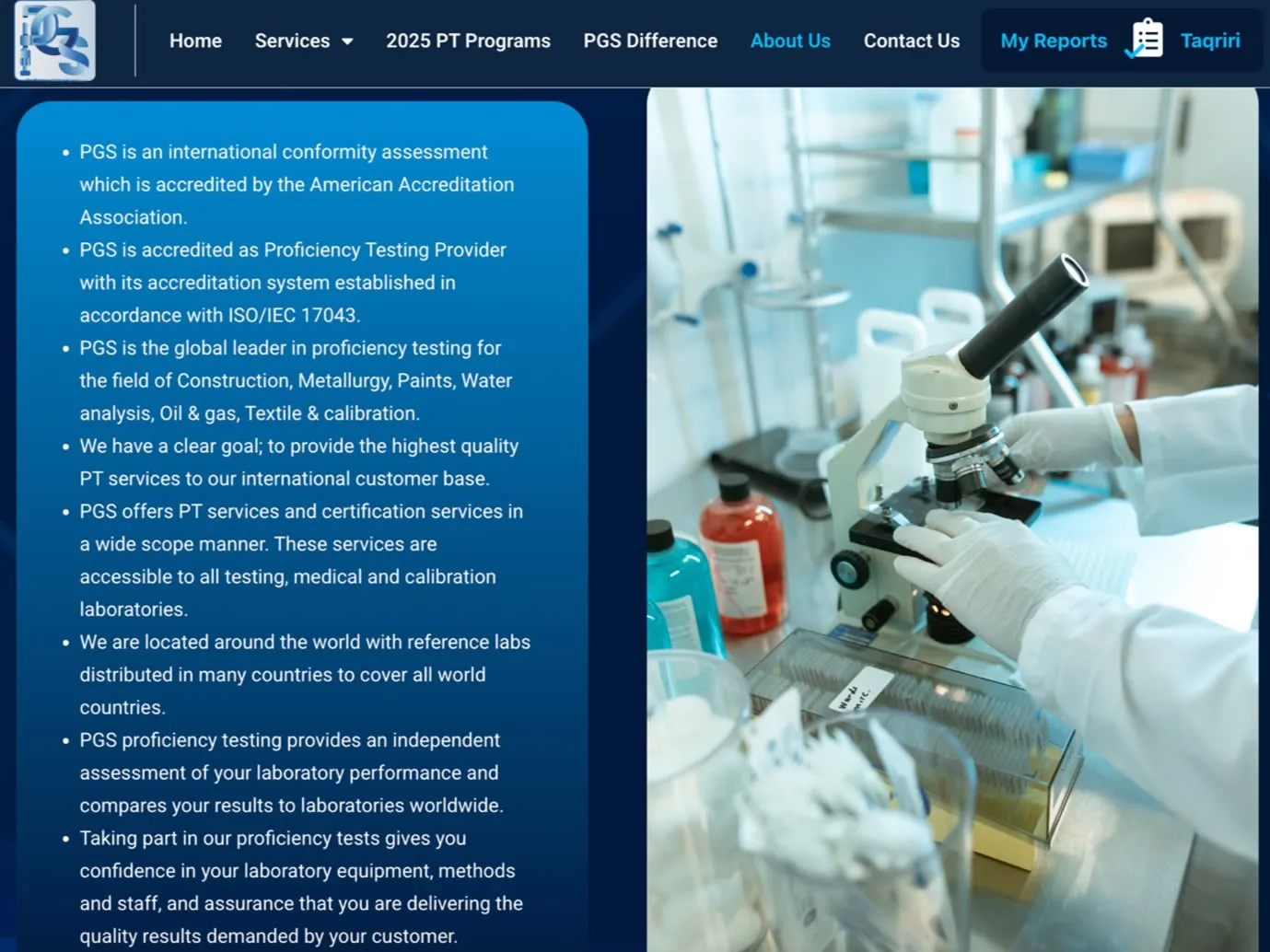
At PGS, a pioneering leader in proficiency testing services, the pursuit of excellence has always been integral to their mission. Their journey to achieving accreditation as a Proficiency Testing Provider marked a defining moment in their history. This achievement has not only validated their commitment to quality but also transformed their operations, opening new doors for technical innovation, business optimization, and commercial growth. ISO 17043 accreditation, a globally recognized standard for proficiency testing providers, has solidified PGS’s position as a trusted partner in ensuring measurement accuracy and laboratory competence worldwide. This is the story of how accreditation revolutionized their organization and propelled them toward unprecedented success.
The Drive for Accreditation
In an increasingly competitive and regulated industry, PGS recognized the importance of accreditation as a critical differentiator. Accreditation was not just about compliance; it was about achieving excellence, building trust, and creating value for their clients and stakeholders. Why ISO 17043? For PGS, accreditation represented:
Credibility: Demonstrating that their proficiency testing schemes met the highest international standards.
Quality Assurance: Providing confidence to clients about the reliability and accuracy of their services.
Market Access: Unlocking new opportunities in industries and regions where accreditation is a mandatory requirement.
The decision to pursue accreditation was driven by a desire to elevate their technical capabilities, enhance business operations, and gain a competitive edge in the global market.
Technical Advancements Through Accreditation
Achieving accreditation required a rigorous assessment of PGS’s technical processes and infrastructure. This journey not only validated their technical competence but also drove significant advancements in their operations.
Strengthening Proficiency Testing Processes
One of the key outcomes of accreditation was the enhancement of PGS’s proficiency testing schemes. By aligning with ISO 17043 standards, PGS:
Improved Scheme Design: Developed robust methodologies to ensure accurate and reliable results.
Enhanced Statistical Analysis: Leveraged advanced statistical tools to evaluate performance data with precision.
Increased Traceability: Ensured all processes adhered to metrological traceability principles, reinforcing result integrity.
Investing in Technology
To meet the stringent requirements of accreditation, PGS upgraded its technical infrastructure, integrating state-of-the-art technologies to improve service delivery. Key investments included:
Data Management Systems: Implemented automated systems to streamline data collection, analysis, and reporting.
Advanced Measurement Tools: Acquired cutting-edge equipment to enhance the accuracy of testing procedures.
Digital Transformation: Leveraged cloud-based platforms for efficient collaboration and secure data storage.
Building Technical Expertise
Accreditation also emphasized the importance of a skilled workforce. PGS invested heavily in training and development to ensure their team possessed the technical knowledge required to meet accreditation standards. As a result:
Employees achieved internationally recognized certifications, enhancing their proficiency in specialized areas.
Cross-functional teams collaborated more effectively, fostering innovation and problem-solving.
A culture of continuous improvement was embedded throughout the organization.
Business Transformation
Accreditation was not just a technical milestone for PGS; it was a catalyst for business transformation. The accreditation process prompted the company to reimagine its operations, governance, and overall approach to quality management.
Optimizing Operational Efficiency
Accreditation drove PGS to implement robust quality management systems that streamlined their workflows and reduced inefficiencies. Key improvements included:
Standardized Procedures: Established clear protocols to ensure consistency across all proficiency testing schemes.
Risk Management: Introduced proactive risk assessment frameworks to identify and mitigate potential issues.
Continuous Monitoring: Developed performance metrics to track progress and drive data-driven decision-making.
These changes not only improved operational efficiency but also enhanced the reliability and timeliness of their services, delighting clients and stakeholders alike.
Strengthening Governance and Compliance
Accreditation reinforced PGS’s commitment to ethical practices and regulatory compliance. The company implemented stricter oversight mechanisms, ensuring:
Adherence to international standards and legal requirements.
Transparency in reporting and communication with clients.
Accountability at every level of the organization.
Fostering a Collaborative Culture
The accreditation process united PGS’s teams around a shared vision of excellence. Employees were empowered to contribute to the company’s success, leading to:
Increased engagement and morale.
Greater collaboration between technical and business units.
A unified commitment to achieving organizational goals.
Commercial Growth and Market Impact

PGS Building Confidence in Proficiency Testing !
Accreditation has had a profound impact on PGS’s commercial success. By achieving this prestigious certification, the company enhanced its market position, attracted new clients, and unlocked significant growth opportunities
Differentiation in a Competitive Market
In a crowded marketplace, accreditation set PGS apart. Clients recognized the value of working with an accredited provider, leading to:
Increased client retention and loyalty.
Higher success rates in securing competitive contracts and tenders.
Enhanced reputation as a trusted leader in proficiency testing.
Global Expansion
Accreditation opened new doors for PGS to expand its footprint globally. By meeting international standards, the company:
Entered new markets where accreditation is a prerequisite.
Partnered with multinational organizations seeking accredited proficiency testing providers.
Navigated complex regulatory landscapes with ease, ensuring compliance across regions.
Revenue Growth
The commercial benefits of accreditation were evident in PGS’s financial performance. The company reported:
A substantial increase in revenue post-accreditation.
Growth in their client base, including high-profile organizations.
Improved profitability driven by operational efficiencies and new business opportunities.
Enhanced Brand Equity
Accreditation reinforced PGS’s reputation as a leader in their field. This enhanced credibility translated into:
Stronger relationships with clients and partners.
Increased media coverage and industry recognition.
A competitive edge in attracting top talent.
The Road Ahead
For PGS, ISO 17043 accreditation is not the end of the journey but a foundation for future success. The company remains committed to:
Expanding their range of proficiency testing schemes to meet evolving industry needs.
Investing in sustainable practices to minimize environmental impact.
Leveraging accreditation to drive innovation and shape the future of proficiency testing.
As PGS looks to the future, their focus will remain on delivering exceptional value to their clients, advancing their industry, and maintaining the highest standards of quality and reliability.